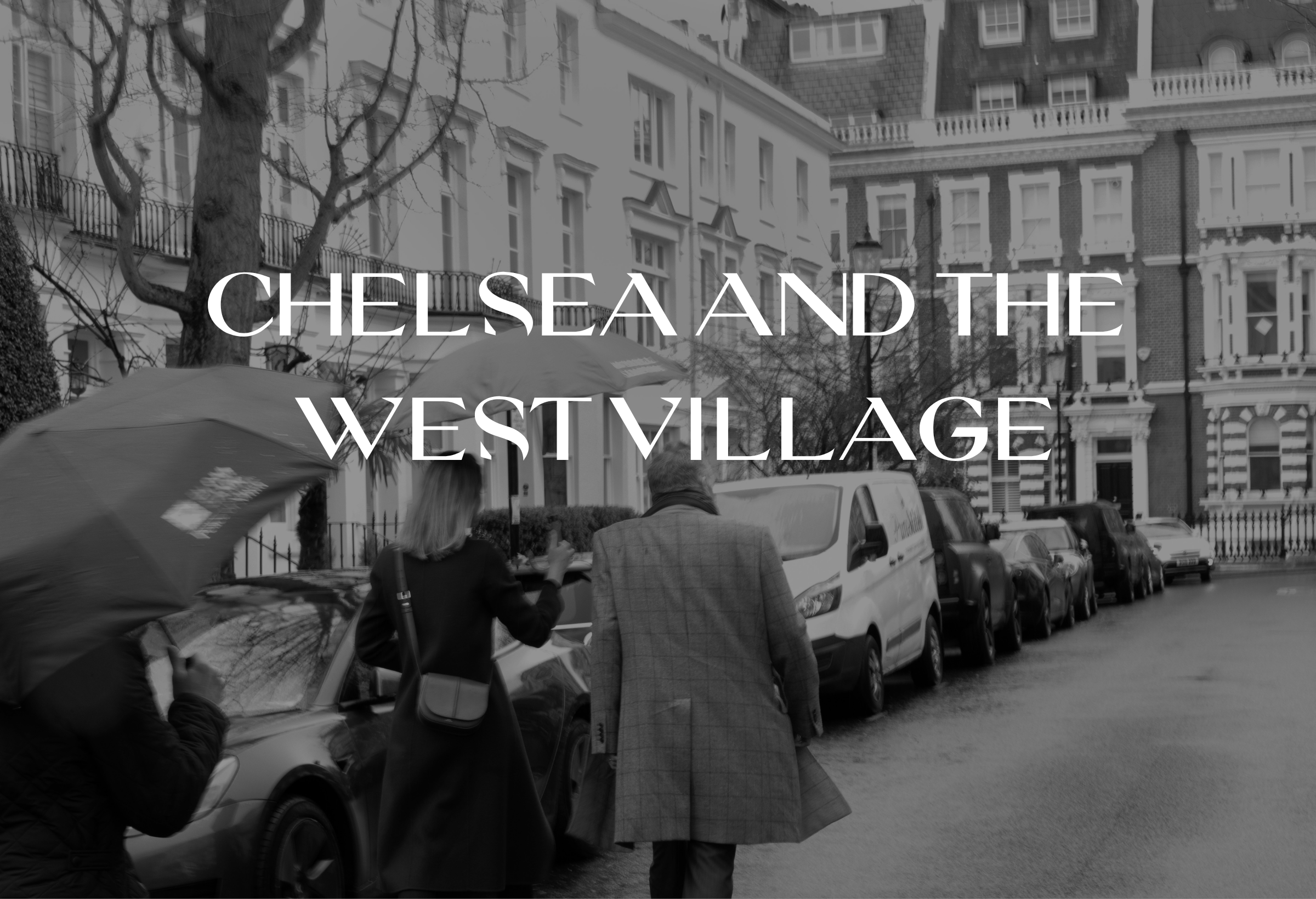
Across the Atlantic, two neighborhoods speak the same quiet language of charm, character, and considered living: Chelsea in London and the West Village in New York. On paper, they couldn’t be further apart—one set along the Thames, the other along the Hudson—but walk their streets and the parallels quickly emerge. Both are places where heritage meets modern life, where art and culture are woven into daily routines, and where the pace, though slower than the cities around them, hums with unmistakable energy.
Streets That Tell Stories
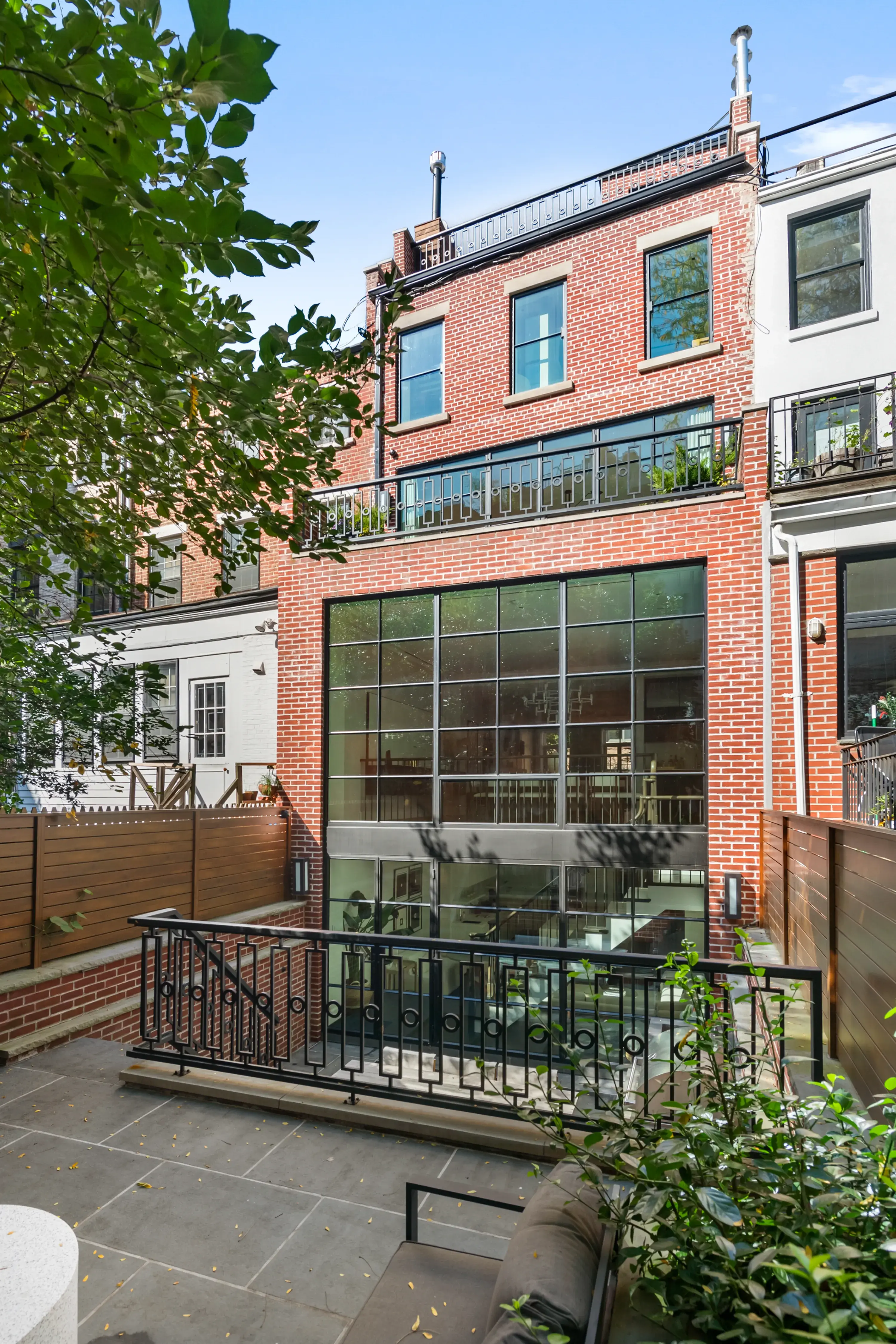
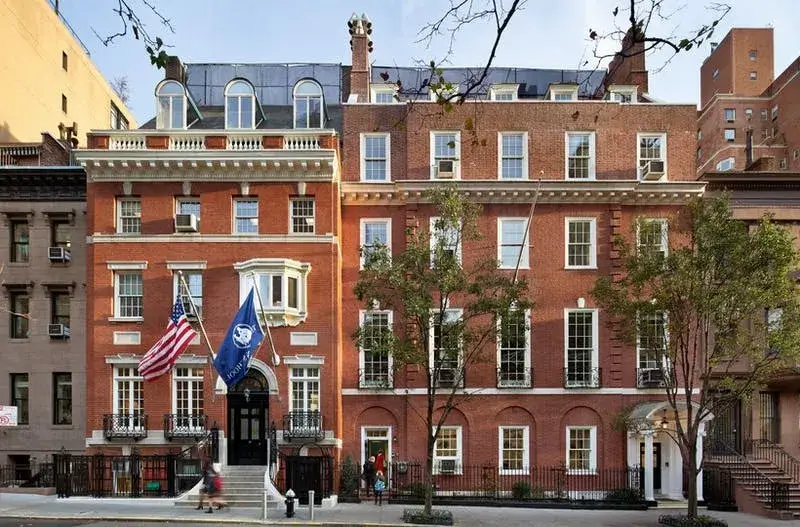
Chelsea’s King’s Road, once the playground of London’s counterculture, is now lined with boutiques, galleries, and cafés that balance heritage with contemporary polish. Similarly, the West Village trades Manhattan’s grid for crooked, cobblestone streets—lanes that feel discovered rather than designed. Both neighborhoods carry a sense of history in their architecture: Chelsea with its regal townhouses and pastel terraces, the West Village with its ivy-clad brownstones and sunlit squares
Cafés, Coffee, and Rituals
In both Chelsea and the West Village, mornings begin not in a rush but in ritual. Chelsea residents linger at Charlotte’s Cloud or The Black Penny, while West Villagers filter into The Elk or Café Kitsuné. There’s always a pastry involved—Poilâne’s buttery croissants in Chelsea, Daily Provisions’ famed crullers in the Village. In both places, the café is less a pitstop than a stage for neighborhood life, where locals catch up, read the paper, and take their time.

Dining as an Experience
When it comes to dining, both neighborhoods know how to elevate the ordinary. Chelsea offers everything from casual elegance at Colbert to fine dining at Restaurant Gordon Ramsay. Across the ocean, Via Carota and L’Artusi set the gold standard for Italian cooking in New York, while Buvette’s cozy glow feels like it could sit comfortably on a Chelsea back street. Both neighborhoods thrive on a blend of high and low: a Joe’s Pizza slice after a night out in the Village mirrors the ease of grabbing a loaf at GAIL’s in Chelsea.
Art, Culture & Community
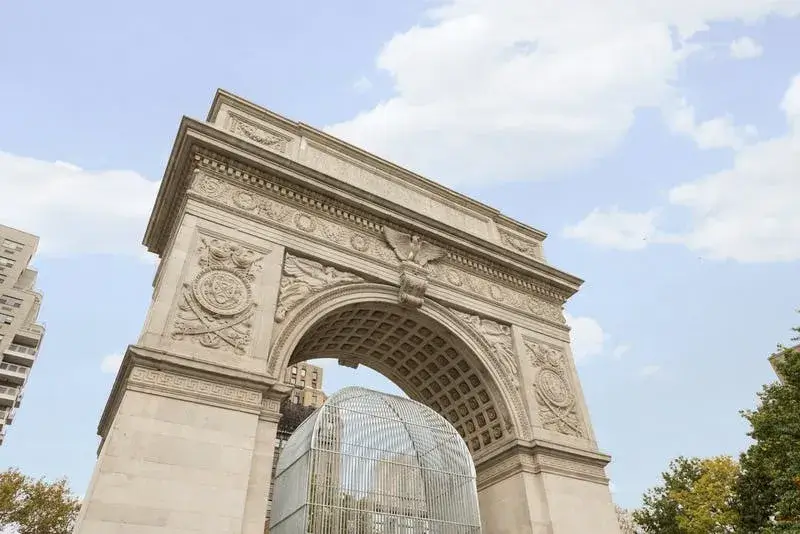
Art feels inseparable from both places. Chelsea’s Saatchi Gallery and Cadogan Hall parallel the West Village’s Whitney Museum and Washington Square Park, each blending culture with community. Both neighborhoods host world-renowned institutions alongside smaller, intimate cultural spaces, making art feel less like an event and more like part of daily life.

Green Spaces & River Walks
Despite their city-center locations, both neighborhoods offer breathing room. Chelsea has the Chelsea Physic Garden and the annual Chelsea Flower Show, as well as serene strolls along the Embankment. The West Village looks westward, where Hudson River piers provide lawns, breezes, and sunsets. In both, water acts as a natural border, softening the urban edge and creating moments of stillness.
A Way of Living That Lasts
Perhaps the truest similarity lies in their spirit. Neither Chelsea nor the West Village is about trends; they’re about timelessness. Life here is made up of small, well-considered rituals: the same café table, the familiar bookseller, the florist who knows your name. They’re neighborhoods defined not by spectacle but by the sense that you’ve arrived somewhere fully formed, a place that knows exactly who it is.
Chelsea and the West Village: Different Cities, Same Soul
One sits in London, the other in New York, but both Chelsea and the West Village embody a rare mix of history, culture, and ease. They’re neighborhoods where life slows just enough for you to notice its beauty—whether it’s a wisteria-draped townhouse in Manhattan or a courtyard bistro in London. For those who know them, these are not just places to live, but places to belong.